To download any of the previous reports in the Hollywood Diversity Report series, click HERE.
To learn more about the UCLA Entertainment and Media Research Initiative, click HERE.
UCLA Hollywood Diversity Report 2026 Part 1: Theatrical Download the Full Report HERE
Meet UCLA’s 2026 Thomas E. Lifka Staff Excellence Award Winners
The award recognizes staff who have demonstrated exemplary service within UCLA’s Division of Social Sciences
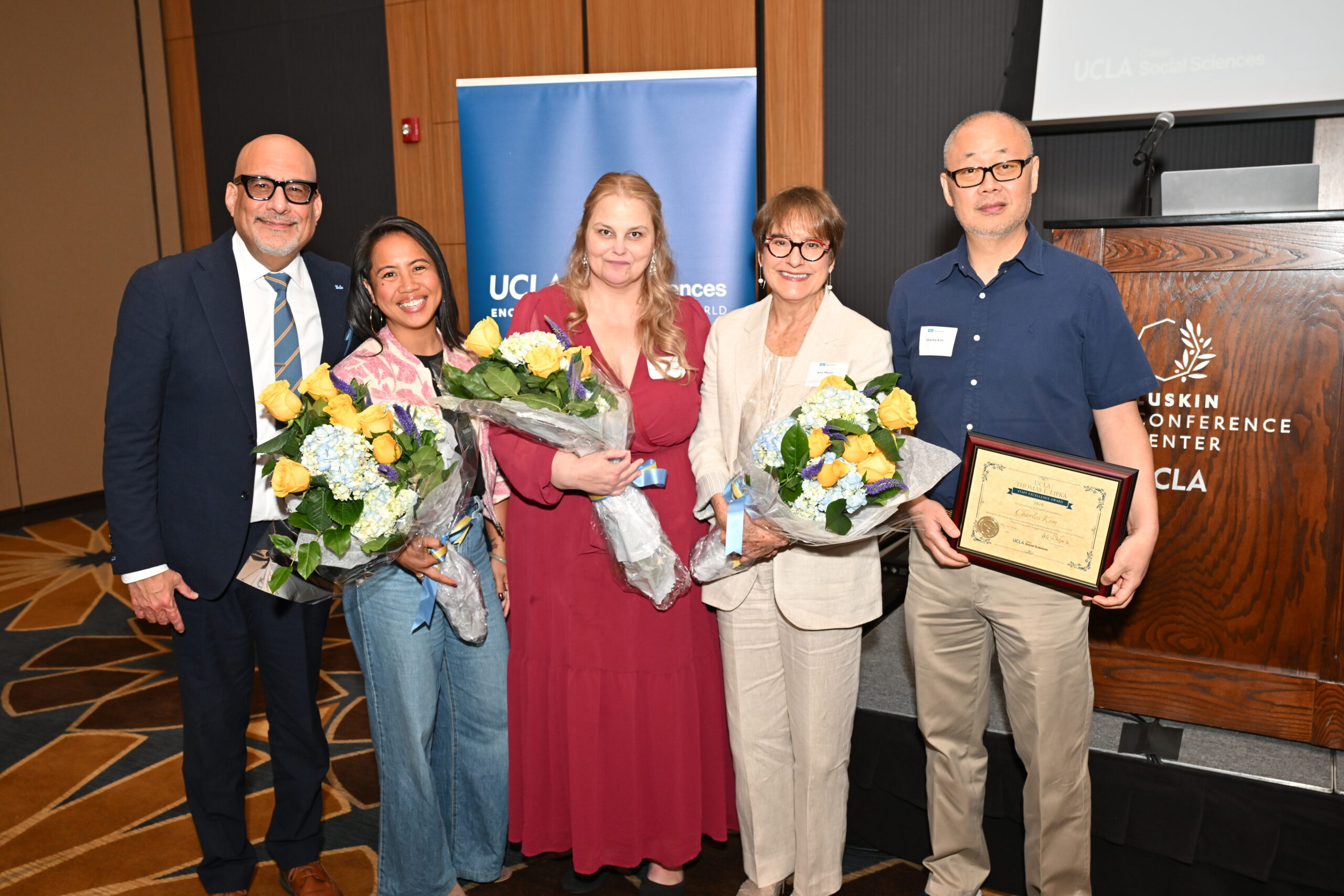
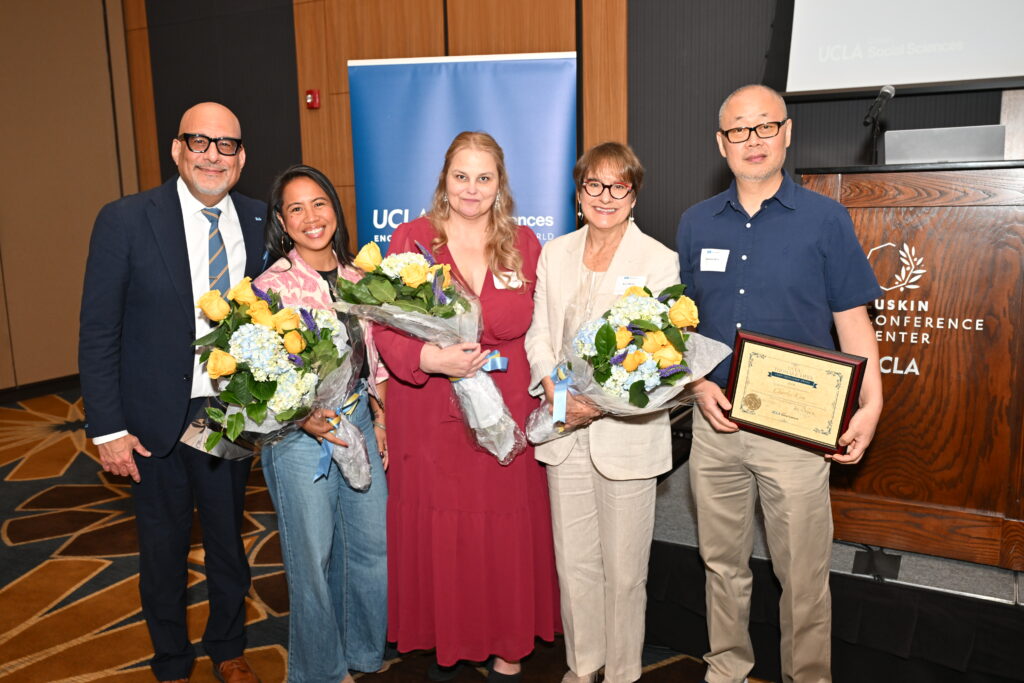
UCLA Social Sciences staff winners of the 2026 Thomas E. Lifka Award pictured with Abel Valenzuela, dean of UCLA’s Division of Social Sciences at the Luskin Conference Center, Centennial Ballroom. Pictured left to right: Dean Abel Valenzuela, Myrna Kikuchi, Stephanie Jeffers, Ann Major and Charles Kim.(Todd Cheney/UCLA Social Sciences)
Citlalli Chávez-Nava
Staff from UCLA’s Division of Social Sciences were honored at the third annual Thomas E. Lifka Staff Appreciation Luncheon and Awards Ceremony held on May 27 at UCLA’s Luskin Conference Center.
The Thomas E. Lifka Staff Excellence Award —the first award of its kind in the division — recognizes staff who have demonstrated exemplary service during the previous academic year or who have established a distinguished career of service within the division. Nearly 100 staff members representing the division’s 19 departments and research centers were in attendance at this year’s luncheon hosted by Abel Valenzuela Jr., dean of UCLA’s Division of Social Sciences.
“You are the people who really know how the university runs,” said Valenzuela during his opening remarks at the event. “Throughout my career here at UCLA, for 30 plus years, I’ve had a fair amount of engagement, interactions, and I hold a lot of respect for the work that you all do.”
Nominating faculty and staff also delivered heartfelt speeches highlighting the outstanding contributions of the award winners to their departments and presented them with certificates.
Named after Thomas E. Lifka, who joined UCLA in 1982 as Assistant Vice Chancellor for Student Academic Services, the award honors his administrative legacy on campus. During his 29-year career at UCLA, Lifka oversaw admissions, financial aid, loan services, the registrar’s office and the career center and international student services. A campus leader and proud gay man, Lifka was an early contributor to UCLA’s efforts to increase enrollment from underserved communities and was also a vocal supporter of the establishment of the LGBTQ+ Resource Center.
In 2023, Dean Valenzuela honored Lifka by creating the award and naming him its first recipient. Lifka then partnered with Valenzuela to endow the award bearing his name to recognize non-academic staff in the UCLA Division of Social Sciences at an annual celebration.
This year, four staff members received the Thomas E. Lifka Staff Excellence Award. Below is the list of winners presented in two different categories: Excellence in Administrative Leadership (2 awards) and Excellence in Staff Performance (2 awards).
Thomas E. Lifka Staff Excellence Award – Excellence in Administrative Leadership
This award honors exceptional Management Services Officers (MSOs) and Chief Administrative Officers (CAOs) within UCLA’s Division of Social Sciences.
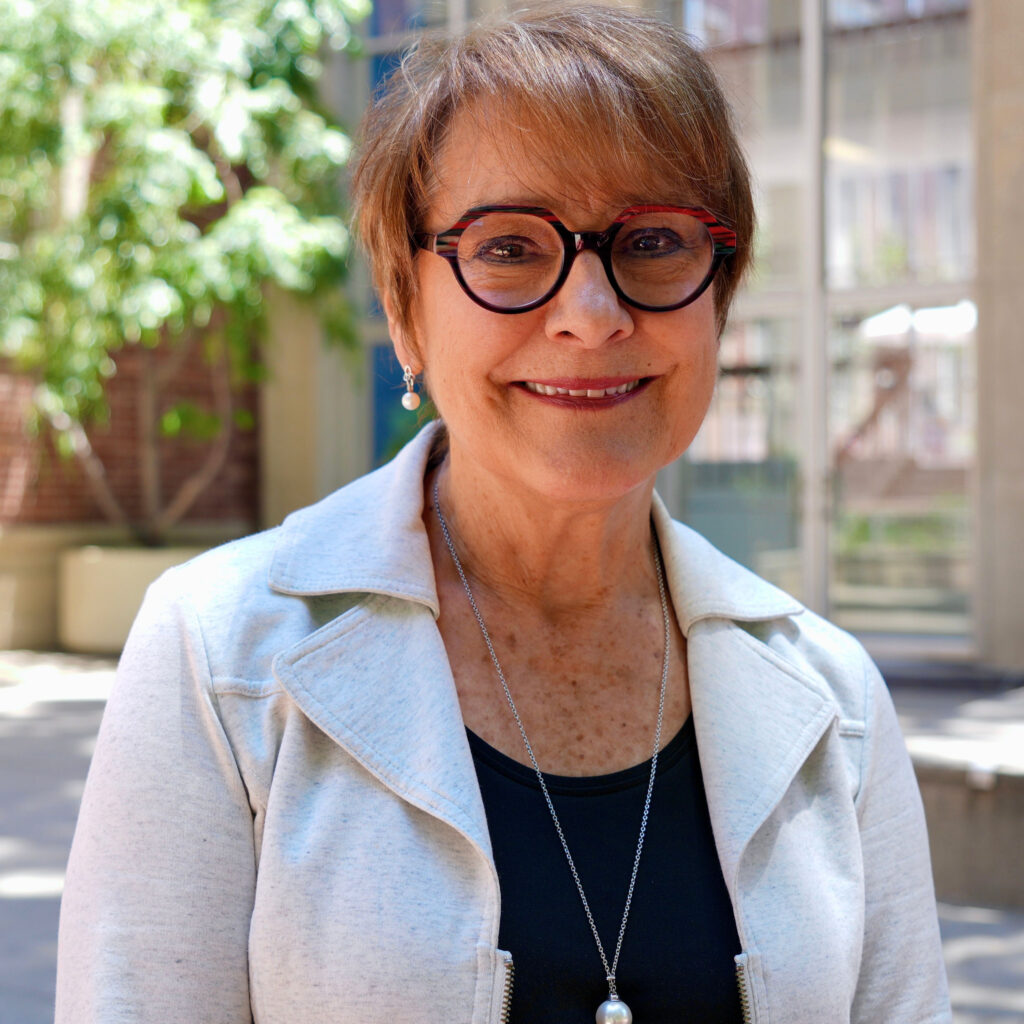
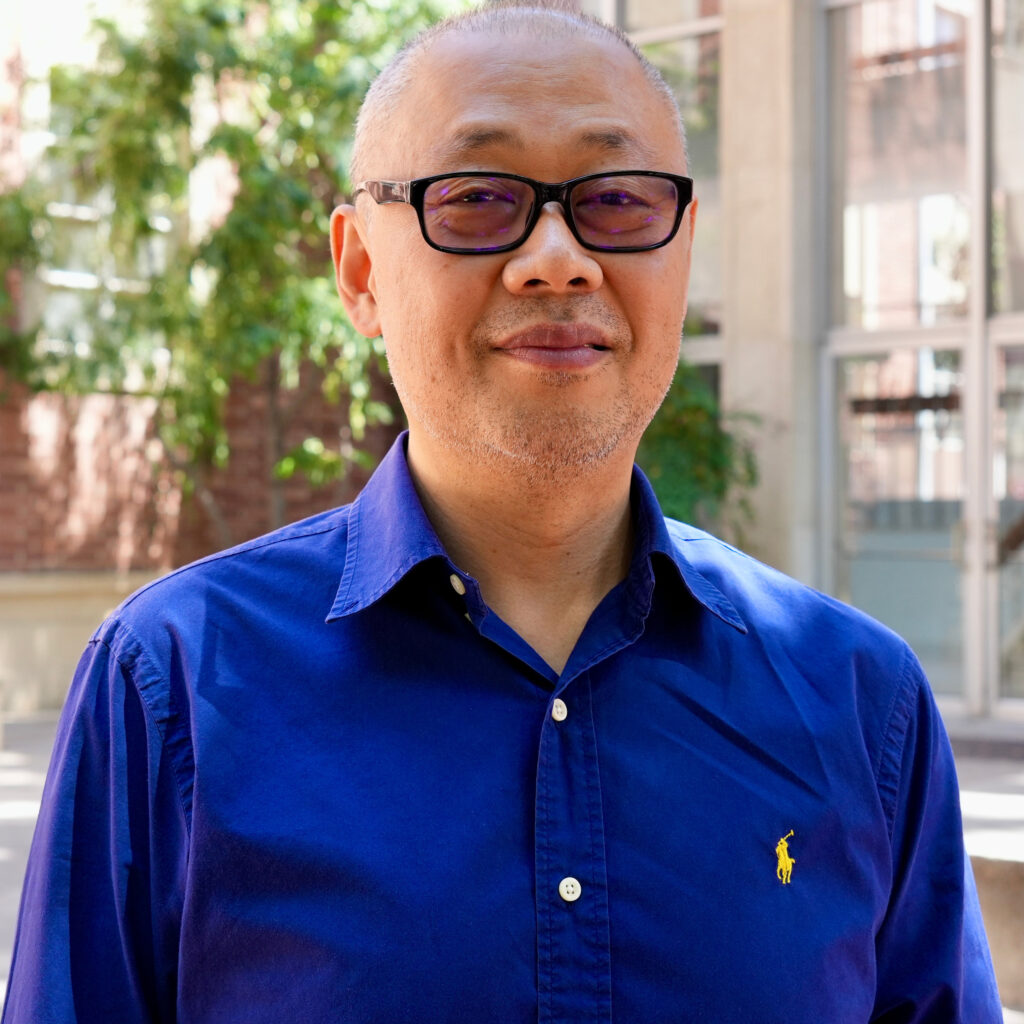
Ann Major, Chief Administrative Officer, UCLA Department of History
Ann Major has been an incredible force in advancing her department’s continued academic, financial, and operational success. In the last four years, due to various staff transitions, Major served as interim chief administrative officer and as a communications and operations manager in addition to sustaining the duties of her own role. Some of her accomplishments included developing a weekly newsletter to improve departmental communications and creating an Emeriti Lounge for retired faculty who have left their offices. She has prioritized growing the department’s social media presence and public outreach capacities.
Excerpt from remarks delivered by Kevin Terraciano, Robert N. Burr Endowed Department Chair and Professor of History.
“Ann has approached the role just like she has all the other roles at UCLA that she’s performed in the last 11 years — she’s very dedicated, she takes it seriously, she’s very professional, she’s very courteous, she’s very personable…[and] she always remembers everyone’s birthdays. We go out for staff retreats — she really cares about the staff and about our department, clearly. And because of that we’re all so very grateful.”
Remarks from Ann Major upon receiving notification of recognition:
“Working in the history department has been a wonderful second career for me. I came to UCLA to finish my B.A. following a successful career as a costume designer, and thought it was an environment I would like to work in…I believe in the power of public higher education to change lives. Leading and supporting my team during the past few challenging years and working closely with our faculty to support their contributions is my way of giving back.”
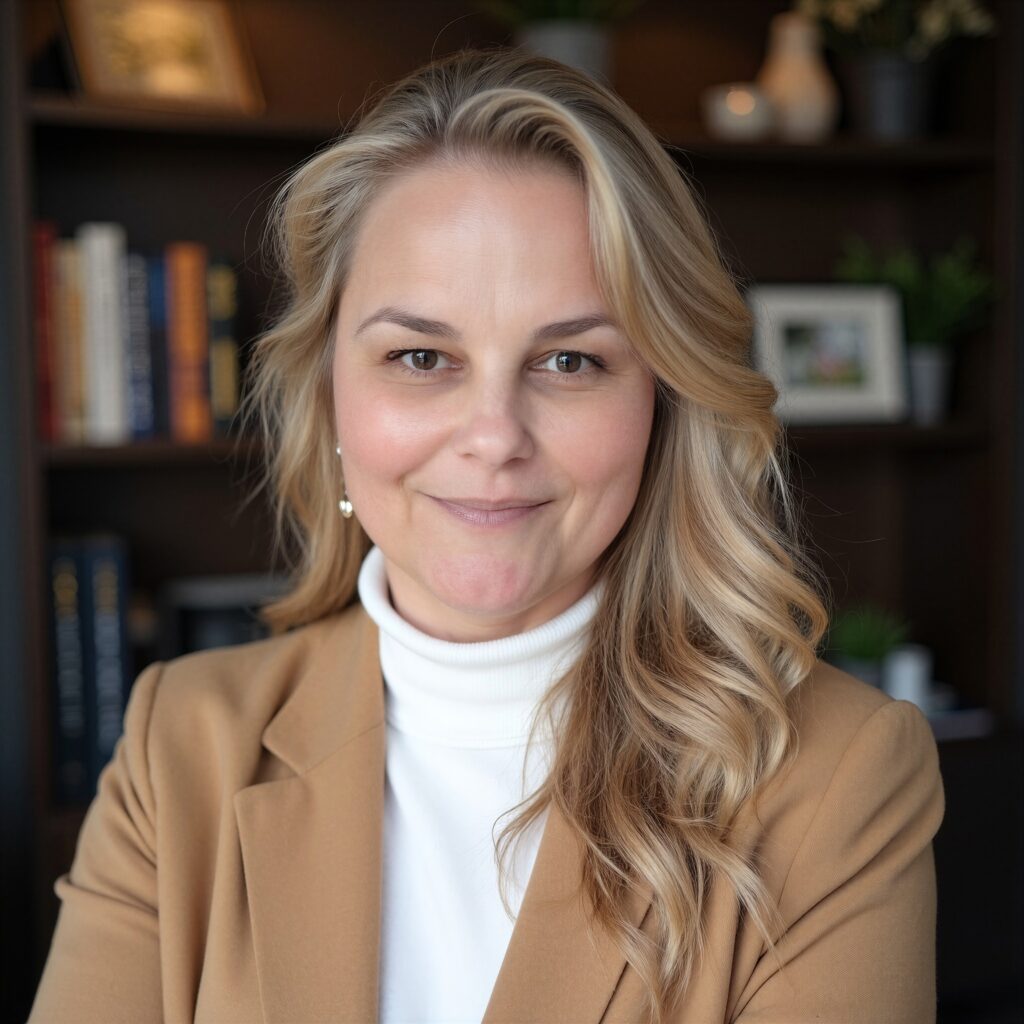
Stephanie Jeffers, Chief Administrative Officer, UCLA Department of Political Science
Stephanie Jeffers is an exceptional, dedicated staff member who has made the department of political science her vocation bringing professionalism, wisdom, experience and empathy to every decision she makes as a leader. Jeffers is committed to fostering a positive, inclusive workplace that allows staff members to feel supported, motivated and empowered to perform at their highest level. Jeffers also excels in recruitment and talent management and advances exceptional financial and resource stewardship.
Excerpt from remarks delivered by Davide Panagia, Department Chair and Professor of UCLA Political Science.
“When I think about Stephanie, I think how much she is an institutional bedrock for our department and for the institution of political science at UCLA in every respect…her greatest flaw is her compassion. I don’t think [compassion] is a word we use very often in our hallways, given the metrics of success that we do have, and that we tend to ignore the very important emotional lives that make all those excellences possible — and so compassion, which literally means to feel with — is Stephanie’s way of providing the foundations of our department. Stephanie feels with, and cares with and for us, and for the things that faculty and students and other staff individually care about.”
Remarks from Stephanie Jeffers upon receiving notification of recognition:
“Every day, I strive to serve the wonderful students, staff, and faculty in Political Science because I genuinely love both my department and my role within it. I’m incredibly grateful for the amazing colleagues I work alongside and for the unique experiences, perspectives, and ideas they bring to our department every day.”
Thomas E. Lifka Staff Excellence Award – Excellence in Staff Performance
This award honors exceptional Social Sciences division staff members (non-MSOs/CAOs). This award is open to various staff positions including program and event specialists, office managers, fund managers, communications specialists, staff analysts, student affairs officers, payroll specialists, and IT coordinators, among others.
Charles Kim, Personnel and Payroll Manager, UCLA Social Sciences Grant Support
Charles Kim is a trusted resource on matters related to human resources and UCPath, known for his deep institutional knowledge and willingness to train new staff members joining departments of the division. Kim regularly develops training materials including written instructional guides, documents, charts and short instructional videos to improve departmental workflows, streamline complicated processes and to preserve institutional knowledge.
Remarks from Caleb “Q” Na, Associate Dean of Finance and Administration, on behalf of Jenny Huynh, Chief Contracts and Grants Officer CAO of Social Sciences Grant Support:
“The team at Social Sciences Grant Support is tremendously grateful for Charles’s expertise and wisdom, thanks to him, the payroll ledgers, and weekly UCPath emails are less intimidating to look at. Charles is our sanity check, and always one call away from helping us digest cryptic emails. With his support, the fund management team has become more knowledgeable about navigating UCPath challenges, and can confidently prepare payroll projections for our faculty. Within these last couple of years, he’s also extended his time and training to support some of the other departments in our division who are facing staffing shortages. We’re incredibly thankful for Charles’ willingness to help, and his 25 plus years of service within the Division of Social Sciences.”
Remarks from Charles Kim upon receiving notification of recognition:
“For the past 25 years, I have been with one department —Social Sciences Grant Support. For most of these years, I have been fortunate to have worked with dedicated colleagues and supportive management and leadership. My motivation comes from working alongside these excellent people. People around me have demonstrated consistent excellence, and I strive to do the same.”
Myrna Dee Kikuchi, Undergraduate Student Advisor, UCLA Department of Anthropology
Myrna Dee Kikuchi is a rigorous, highly-organized, detail-oriented leader who provides excellent guidance to both student and faculty alike to keep her department running smoothly. Her exceptional traits particularly shine through in her work on academic course planning and commencement preparation. Thanks to Kikuchi’s vision, her department’s commencement ceremony becomes a special, memorable experience for graduating students and their families.
Excerpt from remarks delivered by Laurie Kain Hart, Department Chair and Professor of UCLA Anthropology & Co-Director of Center for European and Russian Studies.
“Myrna Dee’s deep understanding of our academic program has been critical to the success of our students. She has a broad vision of everything we do in the department, the whole apparatus. She is the one who catches errors in our spreadsheets, resolves challenges before they become big problems, and draws on past lessons to guide our current and future planning. She’s rigorous, vigilant, and a perfectionist in her work, and an archivist of what we’ve done, and a visionary for what we can do, always encouraging us to have a little more imagination, Myrna Dee’s compassion and care for the situation of every single student enables them to build a strong academic program, and to plan their majors and minors and graduate on time.”
Remarks from Myrna Dee Kikuchi upon receiving notification of recognition:
“The students who come through our Anthropology department inspire me to strive for excellence in my role as Undergraduate Advisor. Knowing that they view me as a helpful and reliable resource as they navigate their academic requirements and the broader complexities of college life and adulthood, makes me really want to show up for them in a positive and productive way. I am also deeply inspired by the undergraduate advising community here at UCLA — the remarkable level of collaboration and support within this incredible network inspires me to contribute my best, fostering collective success and well-being for ourselves and our students.”
View photos from the 2026 Thomas E. Lifka Staff Appreciation Luncheon and Awards Ceremony, here.
Learn more about Thomas E. Lifka’s philanthropic contributions to UCLA’s Division of Social Sciences,here.
2 UCLA history doctoral students awarded 2026 Mellon/ACLS Dissertation Innovation Fellowships
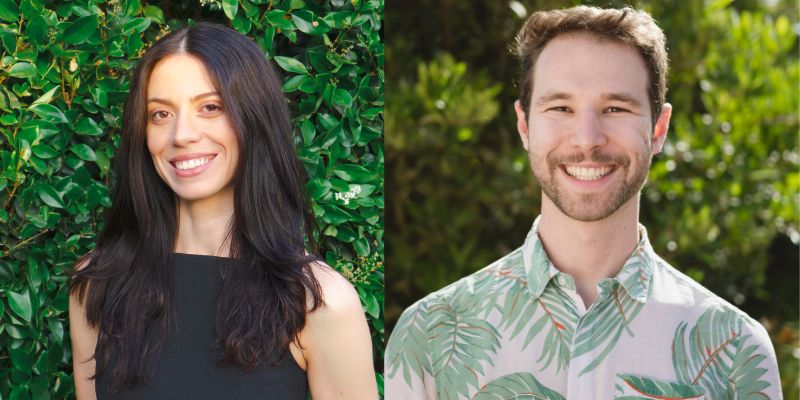
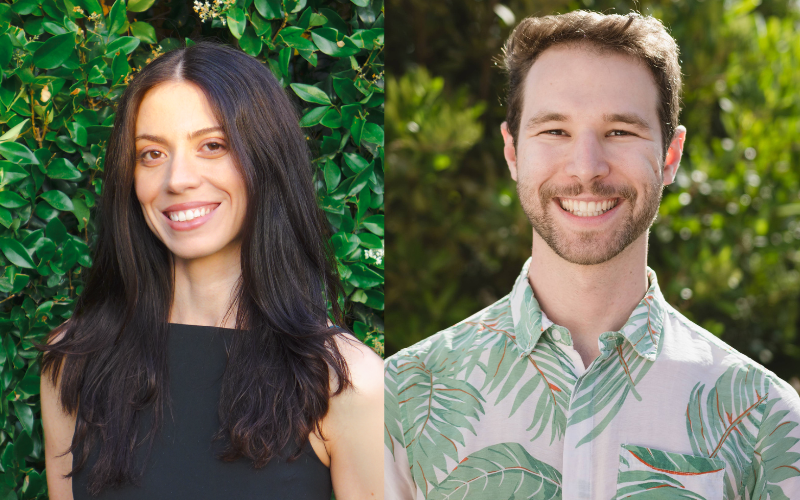
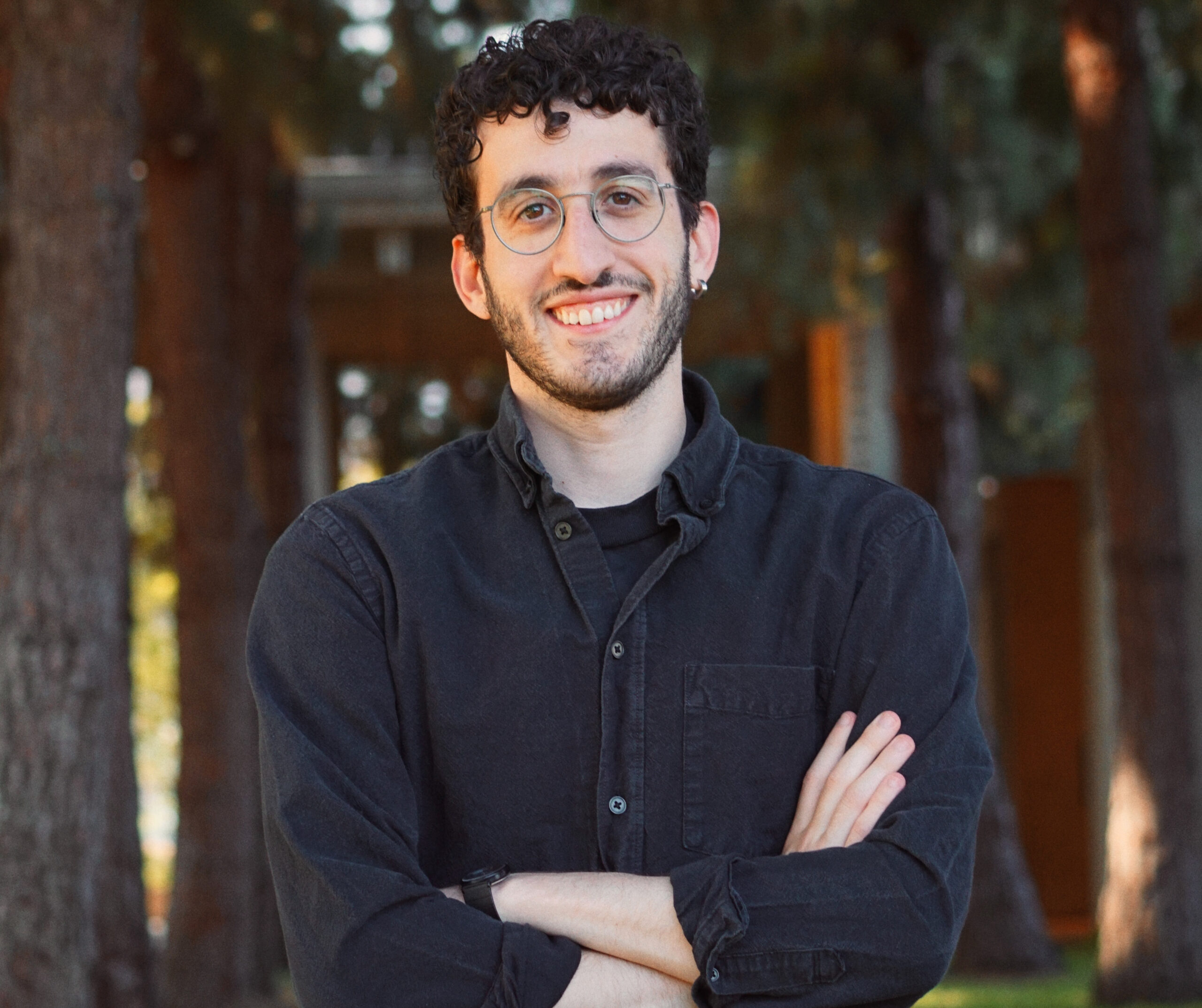
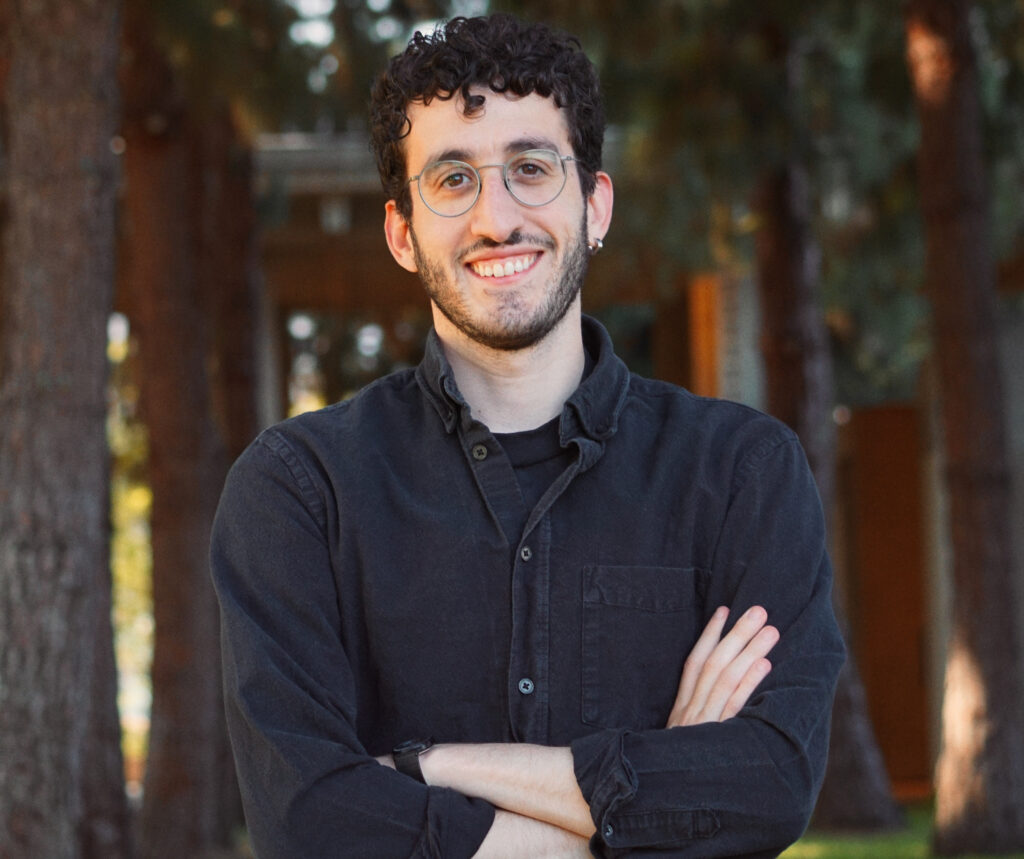
Chiara Di Leone (left) and Benjamin Schneider (right).
UCLA Social Sciences
Two doctoral students, Chiara Di Leone and Benjamin Schneider, from UCLA’s Meyer and Renee Luskin Department of History have been awarded the 2026 Mellon/ACLS Dissertation Innovation Fellowship.
The winning students are among 50 graduate students selected from a pool of over 1,000 applicants through a rigorous, multi-stage peer review process that drew on the expertise of more than 170 scholars across the country. Each fellow will receive an award of up to $52,000.
Generously supported by the Mellon Foundation and administered by the American Council of Learned Societies (ACLS), the program supports doctoral students as they pursue innovative approaches to dissertation research, including new methodologies, formats and collaborations with community partners beyond the academy.
“The 2026 Mellon/ACLS Dissertation Innovation Fellows present some of the most exciting and forward-thinking scholarships happening today in the humanities and social sciences,” said Alison Chang, ACLS Senior Program Officer in US Programs. “ACLS is proud to support their scholarship, and we look forward to following their impact in the academy and beyond.”
“We’re very proud of Chiara and Ben, two outstanding students in our excellent history graduate program, and grateful for the support of the distinguished Mellon/ACLS program,” said Kevin Terraciano, Robert N. Burr Endowed History Department Chair and professor. “Both students employ careful historical methods to address important subjects such as climate change and ecology, public health and medicine. Their projects advance the Luskin Department of History’s mission to promote original research on compelling issues of historical and contemporary significance.”
ACLS launched the Mellon/ACLS Dissertation Innovation Fellowship Program in 2023 to expand and recognize a wider range of research methods, modes and subjects in dissertation research.
The 2026 awardees will pursue a range of approaches to the dissertation, incorporating trans- and inter-disciplinary research, mixed methodologies and non-traditional scholarly formats. Descriptions of their projects can be found below.
Chiara Di Leone, second-year, History PhD Student
Dissertation Title: Re-running Utopia: the Latin American World Model (1976) and the Global Politics of the Future
Di Leone’s research explores the emergence of climate modeling in the long 20th century. She focuses on the 1970s boom in “world models” – from the Club of Rome’s Limits to Growth to alternative simulations emerging from Latin American cybernetics – to show how modeling tools reshaped debates on ecology, development and political futures across the Atlantic. Learn more: https://www.acls.org/fellow-grantees/chiara-di-leone/
Ben Schneider, second-year, MD/History PhD Student
Dissertation Title: Building Health, Restricting Care: Hospital Expansion in Los Angeles, 1965-1991
Schneider’s research explores the history of hospitals in Los Angeles County between the 1960s and 1990s through the lens of hospital expansion. The project combines interdisciplinary social science work in the history of medicine, sociology of health, and health policy with biomedical analysis through dual-degree MD/PhD training. In addition to historical research, the project includes collaborative teaching with community activist groups in public settings to advance health justice in Los Angeles. Learn more: https://www.acls.org/fellow-grantees/ben-schneider/
UCLA Social Sciences: 2026 Distinguished Teaching Award recipients
Winners will be recognized at the annual Andrea L. Rich Night to Honor Teaching during the fall 2026 quarter
UCLA
UCLA Social Sciences
One Senate and two non-Senate Faculty members from UCLA’s Division of Social Sciences were named recipients of UCLA’s 2026 Distinguished Teaching Awards.
From a highly competitive pool of nominees, the awards celebrate teaching excellence and educational innovation, helping to elevate the practice of teaching as outlined in the UCLA for Life flagship initiative, part of Chancellor Julio Frenk’s One UCLA campaign, and the University’s Strategic Plan. The awards recognize deserving instructors for their creativity in the classroom, dedication to helping students thrive and commitment to continually enhancing the educational experience.
Senate and non-Senate Faculty awardees were nominated in one of four categories: Practice of Teaching, Innovation and Impact, Community-Engaged Teaching and Undergraduate Mentorship. The Eby Award recognizes an instructor who demonstrates an ongoing dedication and sustained commitment to teaching and improving student success at UCLA.
Below is a list of UCLA’s Division of Social Science faculty Distinguished Teaching Award winners and a brief description of the type of excellence they bring to the classroom and their mentorship. All award recipients will be recognized at the Andrea L. Rich Night to Honor Teaching, held during the fall 2026 quarter.
Senate Faculty Award Recipient
Brenda E. Stevenson, Distinguished Professor & Nickoll Family Endowed Chair in History and African American Studies
Distinguished Teaching Award in the Practice of Teaching Category & Eby Award for Teaching Excellence, which recognizes an instructor who demonstrates a long-term commitment and sustained impact on teaching excellence at UCLA was also awarded to Stevenson.
Brenda E. Stevenson is an internationally recognized scholar of race, slavery, gender, family and racial conflict, whose work examines the comparative, historical experiences of women, family and community across racial and ethnic lines.
Alongside her remarkable scholarly career, she has demonstrated a decades-long commitment to teaching and mentoring. In the classroom, she fosters an environment that is welcoming, encouraging and intellectually rigorous — creating a space that values students as diverse learners, thinkers, humans and future leaders. Her students describe her as an engaging, passionate instructor that inspires them to think critically and to produce their best not simply for the letter grade, but for the lasting value of what they will learn.
Over the course of her career, she has also mentored generations of students at UCLA. She has chaired 24 doctoral committees in UCLA’s history program and has served as thesis advisor for 20 students in UCLA’s African American Studies master’s program program. In addition, she has been a longtime instructor and advisor for the McNair Research Scholars Program; the Academic Advancement Program; and the Transfer Student Program; as well as the Minority Student Research Program; the Summer Research Program; and the Summer Humanities Institute that helps to prepare students at historically Black colleges to attend graduate school.
In 2014, she received the UCLA Gold Shield Faculty Award, an award that honors mid-career faculty who demonstrate extraordinary accomplishments in undergraduate teaching, research and university service.
Steven Peterson, Sr. Continuing Lecturer, UCLA’s Department of Communication
Undergraduate Mentorship Award
Steven Peterson’s teaching and mentoring philosophy stems from a social-cognitive constructivist approach, in which students create their own knowledge with the support of a skilled facilitator.
A faculty member in UCLA’s Department of Communication for over 20 years, Peterson has applied this philosophy in mentoring undergraduate students, particularly those undertaking Departmental Honors research projects under his guidance. His students know that his mentorship comes with what he calls a “lifetime guarantee” meaning he continues to offer them academic and professional advice long after they have graduated.
The evidence of Peterson’s mentorship is evident in his students’ achievements. Many describe him as a highly significant figure in their college experience and credit him as a key factor in their success after graduation. Former students have landed jobs at nation’s top companies including Disney, Apple, YouTube and the NFL, among others. Other students now hold faculty positions at the University of Michigan and the University of Iowa, among other campuses. His students also regularly receive undergraduate research fellowships and scholarships.
For Peterson, however, the greatest measure of his mentorship’s impact is the intellectual growth, maturity, the superior quality of work, their collegiality, and most importantly, the quality of character his students demonstrate throughout their research journeys.
Chris Surro, Assistant Adjunct Professor, UCLA’s Department of Economics
Undergraduate Mentorship Award
Chris Surro’s central teaching goal is to provide students with both economic knowledge and the ability to apply it in practical ways to their future careers.
A hallmark of Surro’s mentorship has been the building of a UCLA team to participate in the National College Fed Challenge, a national competition that invites undergraduate students to analyze the U.S. economy and develop a monetary policy recommendation which they defend before Federal Reserve economists in real time. When he arrived in 2020, the Department had never fielded a Fed Challenge team — there was no structure, no pipeline and no precedent. Despite this, he built a team from the ground up and transformed its absence into one of the strongest in the country, earning a divisional title during their very first outing.
In total, under Surro’s leadership, UCLA has won four division titles in five years and earned two third-place national finishes out of more than 130 institutions. In fall 2025, the team advanced to the final round in Washington, D.C., presenting in the Federal Reserve Open Market Committee boardroom itself and meeting Federal Reserve Governor Michael Barr.
Across five teams, Surro has mentored 25 students and guided over 100 students through an accompanying course “Econ 162: Monetary Policy” and the Bruin Reserve Bank club he advises. Surro has helped develop students into poised analysts who have gone on to pursue internships at the Federal Reserve and graduate study in economics. Beyond the Fed Challenge, Surro has built an economics alumni network, hosts an annual alumni panel each spring and has created new professional development opportunities for students.
In addition to this mentoring success, Surro regularly teaches classes with enrollments of 300 to 400 students with extraordinary results. Students flock to his courses, and every offering is over-subscribed with full waiting lists. Students frequently comment that Surro was their best instructor at UCLA.
Surro is also a proud Bruin, having graduated with a Ph.D. in economics in 2020.
UCLA doctoral candidate Paul Melas named 2026 Charlotte W. Newcombe Dissertation Fellow
The fellowship is the nation’s largest and most prestigious award for PhD candidates in the humanities and social sciences addressing questions of religion, ethics, morals, or values
Photo Courtesy of Paul Melas.
UCLA Social Sciences
The Charlotte W. Newcombe Foundation has named Paul Melas, a doctoral candidate in UCLA’s Department of Anthropology, a 2026 Charlotte W. Newcombe Doctoral Dissertation Fellow. Melas is one of 20 doctoral candidates selected nationwide to receive a $31,000 stipend for focused dissertation writing during the 2026–2027 academic year.
Established in 1981, the Newcombe Doctoral Dissertation Fellowship supports work engaging ethical, religious and values-based inquiry that demonstrates nuance, depth and intellectual sophistication. Selected projects may be from the ancient past, with modern relevance or focus on a unique perspective on a well-known topic. The award is considered the nation’s largest and most prestigious award for PhD candidates in the humanities and social sciences addressing questions of religion, ethics, morals or values.
Melas’ dissertation considers monastic asceticism in Contemporary Greece, a thousand-year-old community traditionally perceived as insulated from global networks and contemporary social problems. Melas challenges this notion through his long-term immersive fieldwork in the Orthodox Christian monasteries of Mount Athos taking on the arduous and ascetic routines of a monk while following questions of care, ethics and labor within the peninsula. Through his immersion, Melas came to know not only the monks and the clerical hierarchy but also the migrant laborers who worked for or alongside them to sustain daily life and the material infrastructure of the monasteries
“Paul’s grounded ethnographic, theologically-informed and scholarly perspective has revolutionized our understanding of the individual and social impact of monastic life,” said Laurie Hart, professor and chair of UCLA’s Department of Anthropology and Melas’ research advisor. “Following the threads of human movement, material objects, ideas and ambitions, including trips to the Baltics and Uganda, he discovered that despite its famous “isolation,” Mount Athos is not only a spiritual refuge but also part of a national and global network of political and ideological importance to Eastern Orthodoxy internationally.”
Melas’ said his project ultimately seeks to understand how these ascetic traditions, with histories that frequently span millennia, become articulated within contemporary cultural formations and in response to emergent social challenges.
“Contemporary asceticism on Mount Athos cannot solely be understood as an attempt to reject and ‘withdraw’ from a world of moral distractions,” said Melas. “Its performance inevitably leads to the embrace of certain worldly and other-worldly connections and a re-working of one’s relational network. Through their asceticism, monks forge deep relationships with God and other divine figures, pilgrims who visit the community, wage-laborers employed in its economy and Orthodox Christians in parishes throughout Greece.”
Hart said Melas is a brilliant, dedicated scholar who is completely committed to research, teaching and human inquiry more broadly.
“The Charlotte Newcombe Fellowship is a perfect match — and a perfect community — for Paul as a young scholar headed to a career in the comparative anthropology of religion, globalization and social and cultural theory,” she said.
An immigrant and first-generation college student, Melas says he is grateful that his project, focused on anthropology of religion, is receiving national-scale attention.
“My goal is to pursue a career in academia that combines teaching, research and publishing,” he said. “I hope to bring ethnography and other social scientific methods to students who seek to understand the role of religion in their lives and communities.”
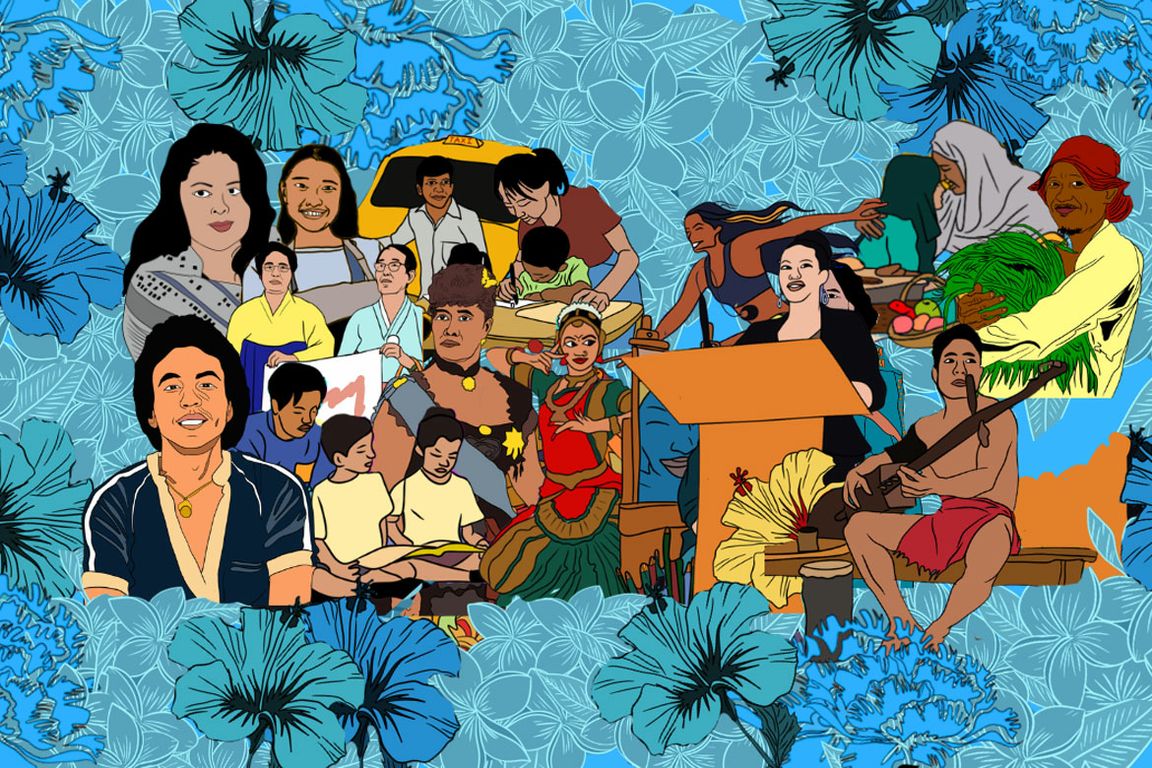
‘Our history is your history’: Multimedia textbook brings Asian American and Pacific Islander experiences to the forefront
How do climate extremes alter the behaviors of animal societies?
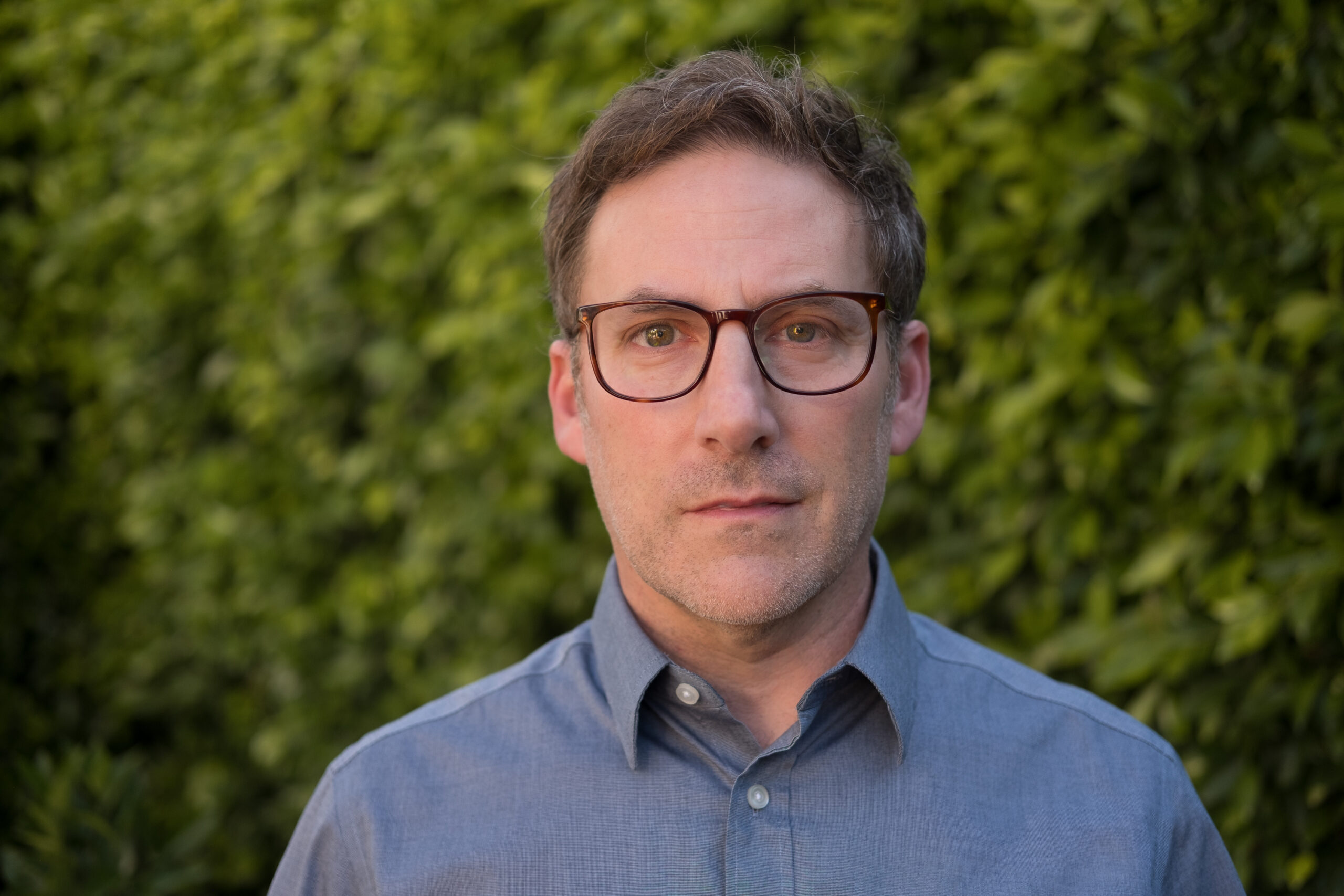
Q&A: Carnegie Fellow Stuart Soroka on how media technologies and market pressures drive polarizing news content
He is among 24 fellows selected to explore the causes of political polarization and to identify possible solutions
Courtesy of Stuart Soroka
Citlalli Chávez-Nava
Stuart Soroka, a UCLA professor of communication and political science (by courtesy), has been named a 2026 Carnegie Fellow. He is among 24 fellows selected to receive a $200,000 research stipend from the Carnegie Corporation for their work exploring the causes of political polarization and to identify possible solutions.
Soroka’s project, “Political Polarization and the News Media Ecosystem,” will examine how changing media technologies and market pressures produce polarizing news content. Using a combination of human coding and computational methods to gather content from multiple platforms, including newspapers, television and social media over the past several decades, he aims to show that polarizing content is not the result of a single outlet’s editorial decisions, but of a competitive media market that drives news outlets toward sensationalism to attract audiences.
At UCLA, his areas of expertise in political communication include negativity bias, misinformation and political behavior. He is particularly interested in analyzing negativity and positivity in news coverage; the ways in which media succeed or fail to inform the public about policy issues; and the impact of legacy and new media on attitudes toward a broad range of policies such as immigration, defense, welfare and health care.
In this interview Stuart discusses his Carnegie-backed project, focused on our news media ecosystem and how it drives political polarization. The interview was edited for length and clarity.
For years you have been investigating the way media succeeds or fails to inform the public about policy issues, and by extension, its impacts on our democracy. Where would you say our media ecosystem stands presently?
I’m thinking of this question in two different ways. Where media consumption is concerned, we have ready-access to more information than ever before — there are 24-hour news channels, and both legacy and new media outlets are easily available online. Mobile technology also means that we have many accurate sources of news in our pockets, albeit alongside many inaccurate sources of news.
There is the potential for new technologies to produce highly informed democratic citizens, provided we can teach both humans and algorithms to prioritize accurate over inaccurate content. But this is of course very hard to do, in part because humans are predisposed to focus on content that supports our predispositions. In fact, the current technological environment makes it increasingly easy for us to consume mainly content that confirms our predispositions. This is one source of polarization.
Where media production is concerned, the current environment is clearly very difficult. Funding news organizations is more complicated because consumers increasingly expect news online to be free. The dissolution of the Corporation for Public Broadcasting doesn’t help, nor do recent limitations in media access to press briefings and to the West Wing. The ability to target specific consumers, either with cable television or online content, also creates an incentive to produce content that confirms partisans’ predispositions. This practice produces a captive audience — but also an audience that is not getting the “full picture.”
And so, there are a combination of technological and administrative challenges facing news organizations, and those challenges likely make it more difficult to provide accurate, balanced coverage. Many good news organizations are findings way to accomplish this goal, to be sure. But there is good reason to be concerned about a trend towards less accurate, more partisan, content. This is also a source of polarization.
Given this landscape, through your Carnegie Fellowship, you will be analyzing how platform design and audience-making happens and how to reduce proliferation of polarizing news content, what are your initial observations?
There is competition amongst news outlets such as CNN and Fox News, of course. There is also competition across news platforms, like television and social media. The nature of one outlet’s content on social media does not just affect other social media content; it likely affects content on other media platforms as well. Exploring this kind of co-adaptation across outlets, platforms and audiences may be central for our understanding of the rise of political polarization and the potential for reducing it. For example: a change in a social media algorithm that de-prioritizes engagement metrics might echo throughout the entire media ecosystem.
What drew you to this research and why is it important in our present political moment?
There are increasing concerns about political polarization, not just in the U.S. but also around the world. Polarizing news content both affects and reflects public attitudes, of course — so changes in news content can only do so much. There is nevertheless a possibility that small changes in the nature of news content can make small differences to trends in political polarization. Moreover, small, de-polarizing, changes in news content may lead to more productive and effective news coverage — coverage that increases news consumption, produces a more informed electorate, and facilitates government responsiveness and accountability.
Overall, are you hopeful about the potential of depolarizing our present media environment?
There are justifiable anxieties about the proliferation of “alternative facts.” But there are also some important factors over which we, governments or companies, have some control, including the nature and competitiveness of media markets, or the behavior of social media and news-aggregator algorithms. I think it is possible to, incrementally at least, produce a news media environment that more effectively contributes to informed democratic citizenship. Exploring this possibility is the focus of my project, and I am grateful to have the resources to focus on this for the next two years.
Wendy Fujinami receives 2026 Chancellor’s Excellence in Service Award
UCLA Social Sciences
UCLA Social Sciences
Wendy Fujinami, department manager in UCLA’s Department of Asian American Studies (AASD) has received the 2026 Chancellor’s Excellence in Service Award. Presented by UCLA’s Staff Assembly, the annual awards are designed to shine a spotlight on the exceptional talent that makes UCLA a place of innovation, inspiration and impact.
Fujinami, who will retire this year after working for more than 38 years at UCLA, was recognized for demonstrating service to support the University’s mission and achieving institutional goals. Her inclusive and responsible leadership style as a manager and her equally important expertise as a former student affairs officer have greatly strengthened the academic mission of AASD.
“This is such an unexpected honor and an incredible way to cap off my career at UCLA,” said Fujinami. “I am so grateful for this recognition and hope that I have made a difference in the lives of our students, staff and faculty.”
The UCLA Staff Assembly Scholarships & Awards Recognition Ceremony will take place on Friday, May 29, 2026. In addition to the award noted above, the 2026-2027 UCLA Staff Assembly Scholarship recipients will be formally recognized. A full list of scholarship recipients will be available on the Staff Assembly website prior to the event.
UCLA names Justin Dunnavant Joan Silsbee Chair in African Cultural Archaeology
UCLA Social Sciences
Photo: Elena Zhukova/University of California
UCLA has appointed Justin Dunnavant the Joan Silsbee Chair of African Cultural Archaeology recognizing his innovative scholarship and leadership in cultural anthropology and archaeology.
Dunnavant is an assistant professor in the UCLA Department of Anthropology, a core faculty member of UCLA’s Cotsen Institute of Archaeology and a maritime archaeologist. His research explores the historical archaeology of Africa and the African Diaspora particularly focused on the transatlantic slave trade and its ecological impact, maritime archaeology and community-based archaeology.
Dunnavant’s research has reshaped his field’s understanding of African-descended communities across the Atlantic world through his exploration of Black culture through the discovery of lost slave ships — and the secrets they carry. His forthcoming book, “Colonialism, Ecology and Slavery,” under contract with Princeton University Press, investigates the relationship between ecology and enslavement in the former Danish West Indies. His scholarship has also been recognized as a vital contribution to the study of the African peoples and to the training of new generations of students about the potential of African and African Diaspora archaeology.
“Professor Dunnavant’s work is cutting edge and draws on multiple archeological methods, it’s about reclaiming history and countering erasure. He brings this lens into the classroom, engaging and training our students to reconsider the past in new ways,” said Abel Valenzuela, dean of UCLA’s Division of Social Sciences.
This spring, Dunnavant earned a Chancellor’s Arts Initiative grant to produce a documentary that follows divers searching for Marcus Garvey’s sunken Black Star Line, a project that reclaims history and challenges of erasure.
Dunnavant is also the co-founder of the Society of Black Archaeologists and an AAUS Scientific SCUBA Diver. In 2021, he was named a National Geographic Emerging Explorer and was inducted into The Explorers Club as one of “Fifty People Changing the World that You Need to Know About.” A Howard University graduate, Dunnavant, received his Ph.D. in anthropology from the University of Florida in 2017, completing a doctoral dissertation based on his archaeological research among the Wolaita ethnic group of Ethiopia.
The Joan Silsbee Chair in African Cultural Archaeology was created in honor of Joan Malloy Silsbee ‘53, following her passing in 2011. During her lifetime, Silsbee made numerous trips to Africa and developed a love of its rich history. The prestigious position was designed to support archaeological research and student training.
“I am honored to hold the Silsbee Chair in African Cultural Archaeology and look forward to developing our newest endeavor exploring the deep history of terrace communities in the Anti-Atlas Mountains of Morocco. With scholars like Merrick Posnansky and Willeke Wendrich, UCLA has played a central role in African archaeology,” said Dunnavant. “In the coming years I intend renew our commitment to this rich legacy and help to train a new generation of terrestrial and maritime archaeologists.”
Endowed chairs at UCLA are among the university’s highest faculty honors, supporting scholarly excellence and advancing research, teaching and public engagement across disciplines. They are made possible by the generosity of alumni, former faculty members and friends of the university. UCLA’s Division of Social Sciences has approximately 300 faculty members, and 35 endowed chairs.