Skip to Main Content

UCLA names Justin Dunnavant Joan Silsbee Chair in African Cultural Archaeology

UCLA Social Sciences
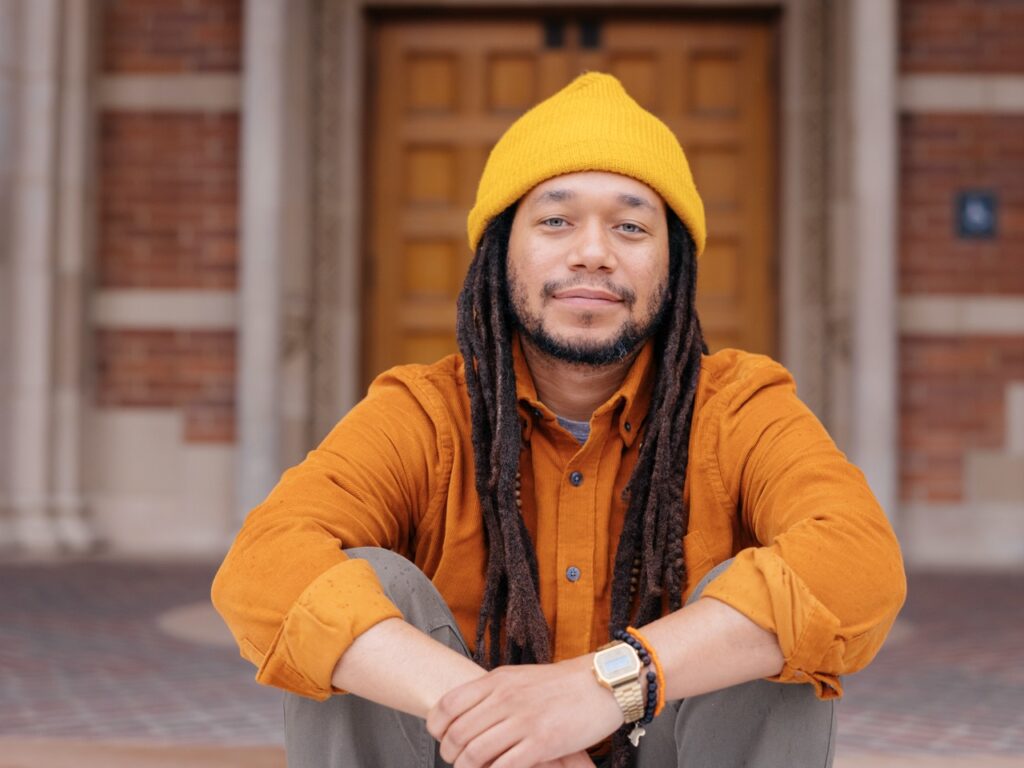
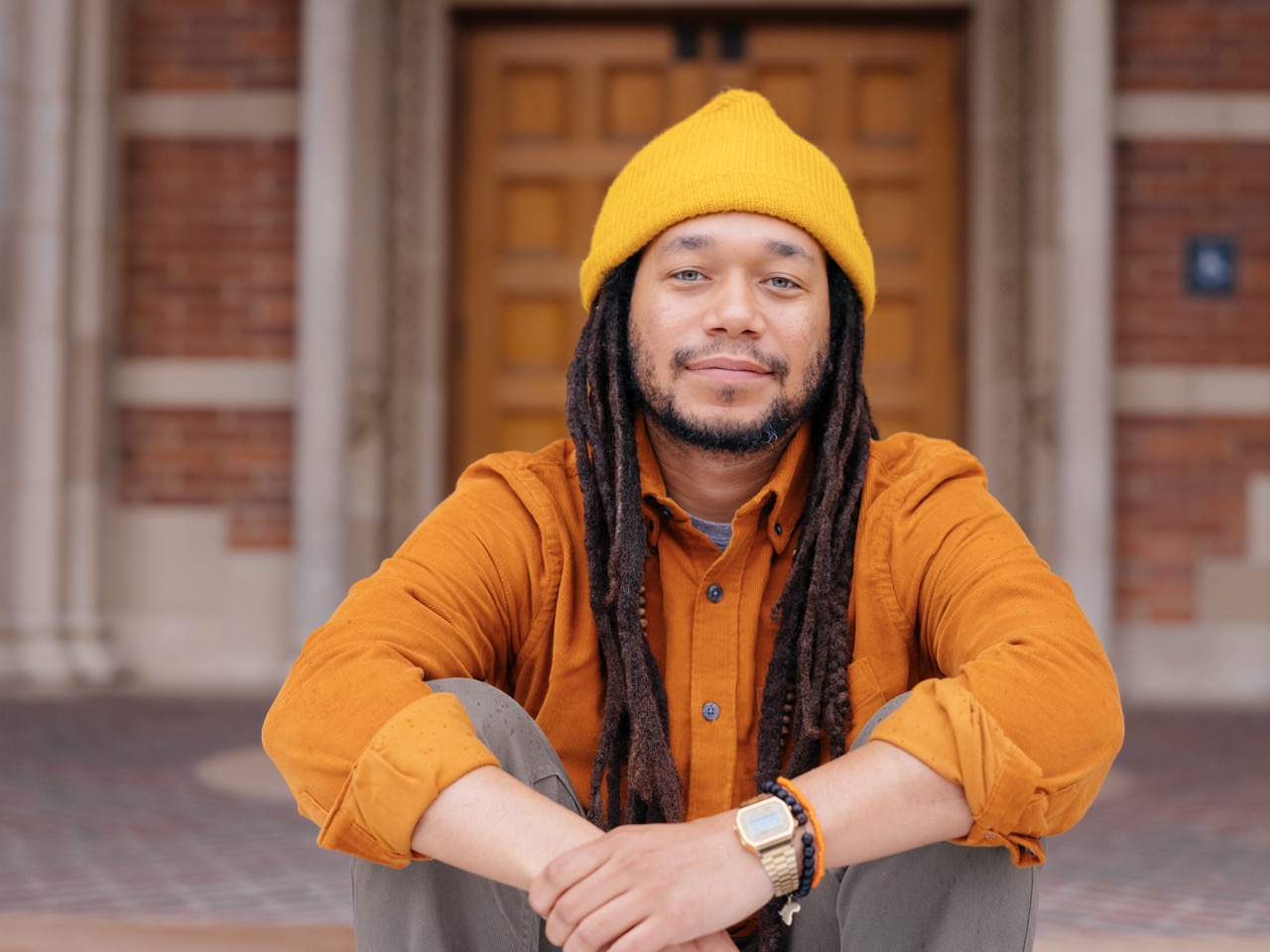
Photo: Elena Zhukova/University of California

UCLA has appointed Justin Dunnavant the Joan Silsbee Chair of African Cultural Archaeology recognizing his innovative scholarship and leadership in cultural anthropology and archaeology.

Dunnavant is an assistant professor in the UCLA Department of Anthropology, a core faculty member of UCLA’s Cotsen Institute of Archaeology and a maritime archaeologist. His research explores the historical archaeology of Africa and the African Diaspora particularly focused on the transatlantic slave trade and its ecological impact, maritime archaeology and community-based archaeology.

Dunnavant’s research has reshaped his field’s understanding of African-descended communities across the Atlantic world through his exploration of Black culture through the discovery of lost slave ships — and the secrets they carry. His forthcoming book, “Colonialism, Ecology and Slavery,” under contract with Princeton University Press, investigates the relationship between ecology and enslavement in the former Danish West Indies. His scholarship has also been recognized as a vital contribution to the study of the African peoples and to the training of new generations of students about the potential of African and African Diaspora archaeology.

“Professor Dunnavant’s work is cutting edge and draws on multiple archeological methods, it’s about reclaiming history and countering erasure. He brings this lens into the classroom, engaging and training our students to reconsider the past in new ways,” said Abel Valenzuela, dean of UCLA’s Division of Social Sciences.

This spring, Dunnavant earned a Chancellor’s Arts Initiative grant to produce a documentary that follows divers searching for Marcus Garvey’s sunken Black Star Line, a project that reclaims history and challenges of erasure.

Dunnavant is also the co-founder of the Society of Black Archaeologists and an AAUS Scientific SCUBA Diver. In 2021, he was named a National Geographic Emerging Explorer and was inducted into The Explorers Club as one of “Fifty People Changing the World that You Need to Know About.” A Howard University graduate, Dunnavant, received his Ph.D. in anthropology from the University of Florida in 2017, completing a doctoral dissertation based on his archaeological research among the Wolaita ethnic group of Ethiopia.

The Joan Silsbee Chair in African Cultural Archaeology was created in honor of Joan Malloy Silsbee ‘53, following her passing in 2011. During her lifetime, Silsbee made numerous trips to Africa and developed a love of its rich history. The prestigious position was designed to support archaeological research and student training.

“I am honored to hold the Silsbee Chair in African Cultural Archaeology and look forward to developing our newest endeavor exploring the deep history of terrace communities in the Anti-Atlas Mountains of Morocco. With scholars like Merrick Posnansky and Willeke Wendrich, UCLA has played a central role in African archaeology,” said Dunnavant. “In the coming years I intend renew our commitment to this rich legacy and help to train a new generation of terrestrial and maritime archaeologists.”

Endowed chairs at UCLA are among the university’s highest faculty honors, supporting scholarly excellence and advancing research, teaching and public engagement across disciplines. They are made possible by the generosity of alumni, former faculty members and friends of the university. UCLA’s Division of Social Sciences has approximately 300 faculty members, and 35 endowed chairs.

Learn More:

UCLA Magazine | Deep Diver: Justin Dunnavant

University of California | Digging, diving and discovering stories untold

UCLA Cotsen Institute hosts ceremony to repatriate remaining limestone burial jars to the Philippines

The artifacts are part of the larger Sally von Dem Hagen Collection discovered during hunting expedition in the 1970s

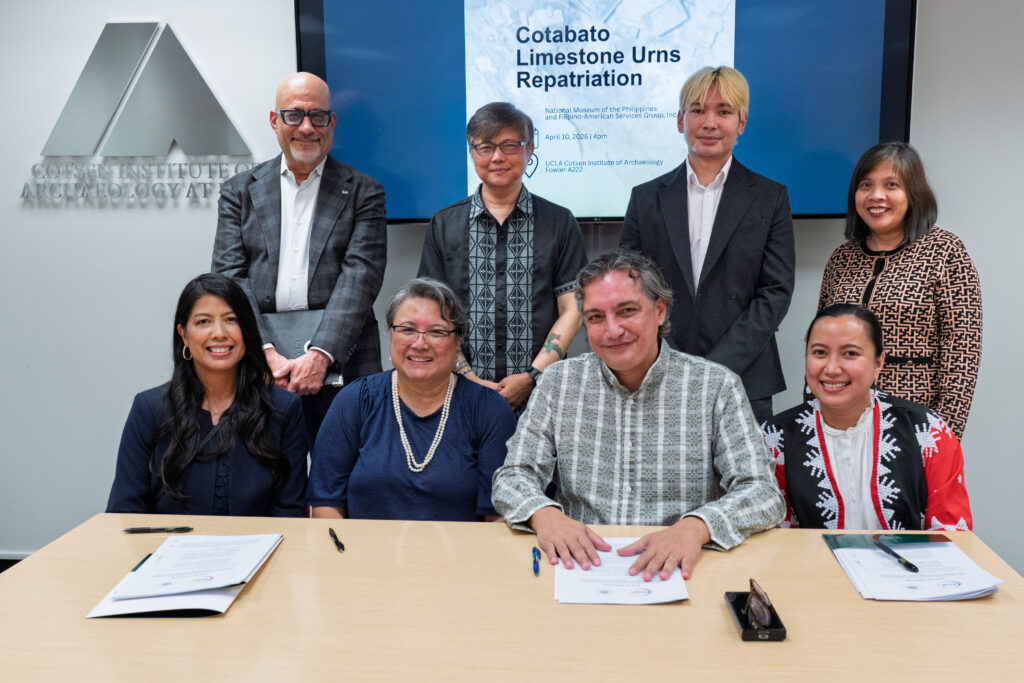
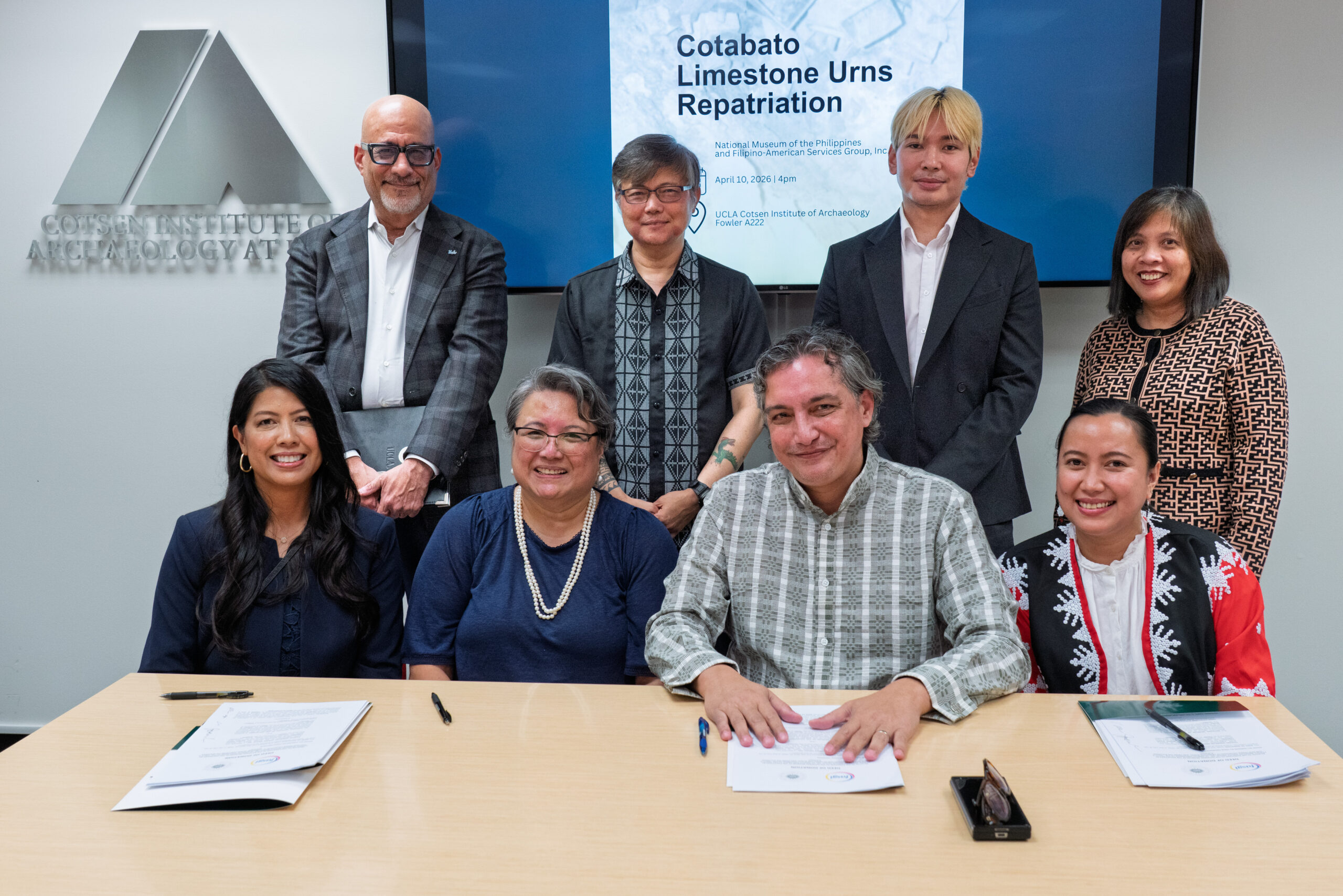
Standing, left to right: Abel Valenzuela Jr., Stephen Acabado, Levi Malaylay, Bembit Villa;
Seated, left to right, Celina Duffy, Yey Coronel-Alcid, Jeremy Barns, Marianne Ubalde-Baclor.
Photo: Paul Connor/UCLA Social Sciences

UCLA Cotsen Institute of Archaeology

Eight remaining artifacts from the Sally A. von dem Hagen Collection of limestone burial objects from the Kulaman Plateau in Cotabato were formally repatriated to the Philippines at a ceremony hosted by UCLA’s Cotsen Institute of Archaeology held on April 10.

At the event held at the Fowler Museum at UCLA, Yey Coronel-Alcid, former executive director of the Filipino American Services Group, Inc. (FASGI), turned over the artifacts to Director-General Jeremy Barns of the National Museum of the Philippines. The turnover was witnessed by Celina Duffy, chairperson of FASGI, and Marianne Ubalde-Baclor, director of the National Museum of Anthropology of the Philippines. The event marked the return of the final pieces of the collection that had remained in the United States under the care of FASGI, with representatives from the Philippine Consulate General in Los Angeles, Consul Levi Malaylay and Cultural Officer Bembit Villa, in attendance.

The repatriation process involved collaboration among several institutions and individuals, including the National Museum of the Philippines, Philippine Consulate General in Los Angeles, FASGI and UCLA’s Cotsen Institute of Archaeology, where the artifacts were temporarily safeguarded prior to their return. The ceremony symbolized the completion of this effort and highlights the role of diaspora organizations and academic institutions in safeguarding cultural heritage while facilitating its return to its country of origin.

“This repatriation is symbolic in many ways,” said Stephen Acabado, chair of UCLA’s Archaeology Interdepartmental Program and director of Center for Southeast Asian Studies. “For decades, these objects were separated from the communities and landscapes where they were created and used. Returning them restores an important connection between heritage and place.”

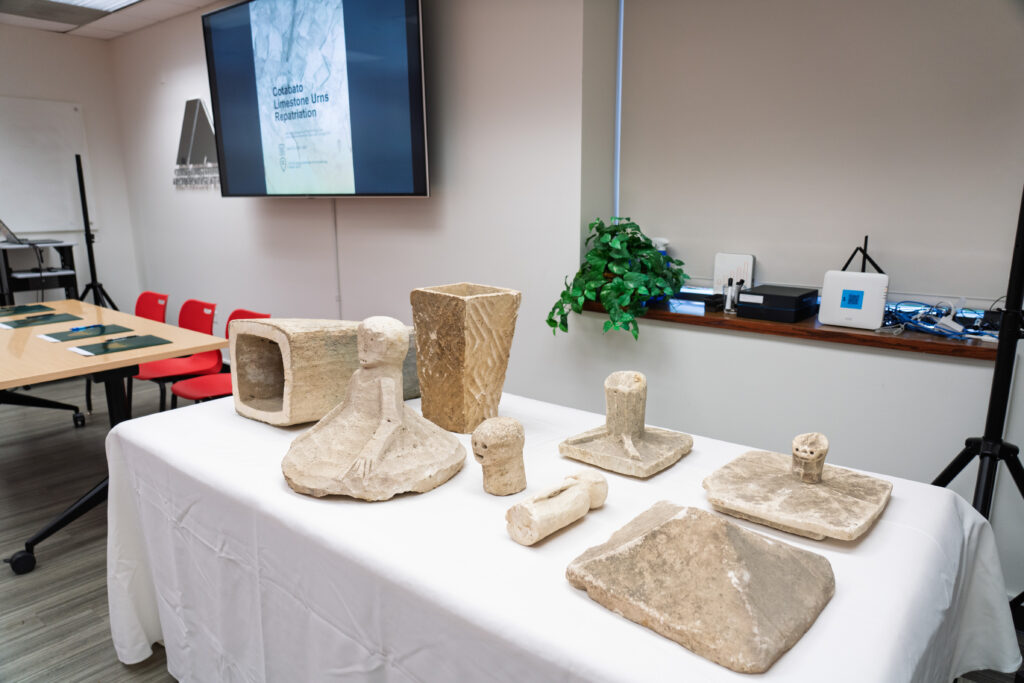
The jars were carved from limestone blocks and date to approximately the mid-first millennium C.E., reflecting burial traditions practiced in parts of Mindanao during around 1,500-2,000 years ago. Photo: Paul Connor/UCLA Social Sciences

The artifacts are part of the larger Sally von dem Hagen Collection, a group of limestone burial jars and associated objects originating from the Kulaman Plateau in what is now Sultan Kudarat, Mindanao, a mountainous region that remains home to Manobo communities whose cultural traditions continue to shape the social and historical landscape of the area. The artifacts were acquired in the early 1970s by American businesswoman Sally von dem Hagen after Dulangan Manobo hunters discovered them in caves during a hunting expedition. When von dem Hagen left the Philippines in 1979, she brought the objects with her to the United States, where they remained for decades.

In 2024, most of the collection—52 limestone burial jars and related objects—was repatriated and officially transferred to the National Museum of the Philippines through the initiative of von dem Hagen’s children and in collaboration with scholars, cultural institutions, UCLA students enrolled in a class titled “Collaborative and Community-Engaged Archaeology” that produced a virtual exhibit as part of this effort and members of the Filipino American community.

“The limestone ossuaries are unique within Philippine archaeology,” said Acabado. “Unlike most burial jars in the country, which are made of clay, the Kulaman examples are carved from limestone blocks and date to approximately the mid-first millennium C.E., reflecting burial traditions practiced in parts of Mindanao during around 1,500-2,000 years ago.”

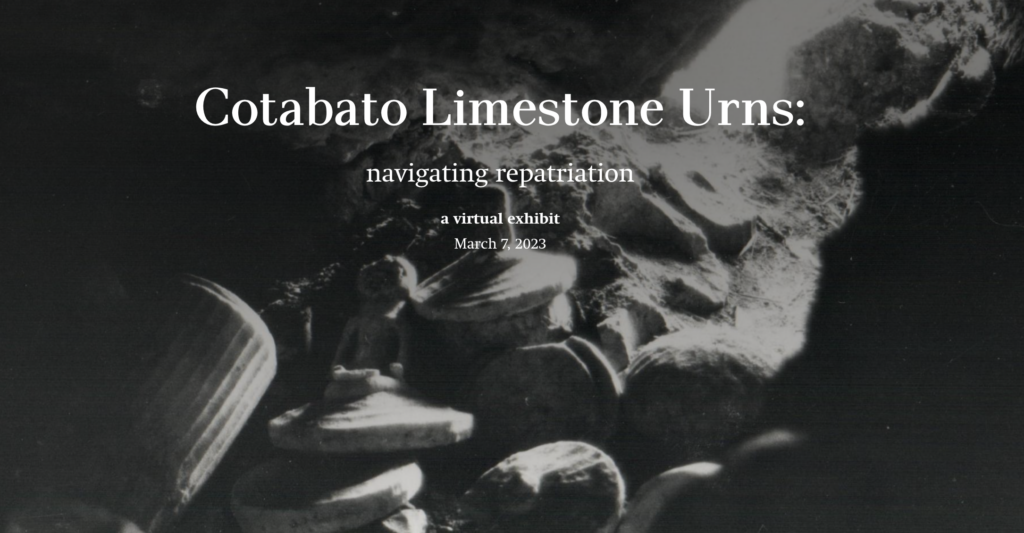
In 2023, UCLA students enrolled in a class titled “Collaborative and Community-Engaged Archaeology,” produced a virtual exhibit to document the repatriation process: Cotabato Limestone Urns: Navigating Repatriation.

Once received by Director-General Barns, the eight artifacts will be transferred to the National Archaeological Collection of the National Museum of the Philippines, where they will join the rest of the repatriated von dem Hagen materials. The objects will contribute to ongoing research on ancient burial practices, stone-carving technologies and the complex cultural histories of Mindanao. The collection can be viewed at the National Museum of Anthropology of the Philippines.

“By working with partners in the Philippines and the Filipino American community, we can help ensure that these materials return to the institutions and communities where they hold the greatest significance,” said Acabado.

The recent ceremony underscores the importance of cooperation between scholars, cultural institutions and diaspora communities in ensuring that heritage objects are treated with respect and returned to the public domain where they can be studied and appreciated.

“Events like this show how universities can contribute to responsible stewardship of cultural heritage,” said Abel Valenzuela, dean of UCLA’s Division of Social Sciences. “It’s an example of UCLA’s commitment to archaeological practices that respect communities and a recognition that heritage objects carry meaning beyond the academy.”

Assistant Professor Kelly Nguyen Guides Students into the Afterlife of Classics

Jason De León honored by American Anthropological Association

Ube may be one of America’s favorite flavors right now, but this purple phenomenon has ancient roots

Latino USA: The Real Lives of Human Smugglers with Jason De León 

The episode featuring Jason De León and his book “Soldiers and Kings: Survival and Hope in the World of Human Smuggling” aired on March 14, 2025.

UCLA Social Sciences

UCLA professor Jason De León who won the 2024 National Book Award for Nonfiction for his book “Soldiers and Kings: Survival and Hope in the World of Human Smuggling” discussed his book on a recent episode of Latino USA with host Maria Hinojosa.  

Drawing on seven years of on-the-ground ethnographic research and interviews, “Soldiers and Kings” gives voice and unprecedented context to the people, most of them young men, who make a precarious living smuggling migrants from Central America and Mexico into the United States. 

During the interview, De León talked about the sociopolitical conditions that drive human smuggling: “I think people fail to realize that human smuggling is the outcome of border policies, changes in border security, the drive to have undocumented labor in the United States. Smuggling is responding to those things,” he said. “All these guys, they know that human mobility is unstoppable. There is nothing you can do to stop people who are desperate to find some new and better place.” 

Listen to the full interview here.  

De León is the director of UCLA’s Cotsen Institute for Archaeology and professor of anthropology and Chicana/o and Central American studies within UCLA’s Division of Social Sciences. In 2017, he was a 2017 MacArthur Genius fellow.

Jason de Leon’s award-winning “Soldiers and Kings” named to the 2025 Pen America Literary Awards longlist 

UCLA Social Sciences

The author of the winning book will be honored at the annual PEN America Literary Awards Ceremony considered “The Oscars for Books.” (Composite: PEN America)

Jason De Leon’s book, “Soldiers and Kings: Survival and Hope in the World of Human Smuggling” has been selected on the longlist for the 2025 PEN America Literary Awards.  

Drawing on seven years of on-the-ground ethnographic research and interviews, “Soldiers and Kings” gives voice and unprecedented context to the people, most of them young men, who make a precarious living smuggling migrants from Central America and Mexico into the United States. 

Founded in 2016, the PEN/Jean Stein Book Award is an annual award which recognizes a book-length work of any genre for its originality, merit, and impact, which has broken new ground by reshaping the boundaries of its form and signaling strong potential for lasting influence. A distinguished panel of judges nominates candidates internally. The author of the winning book will receive a prize of $75,000 and will be honored at the annual 61st annual PEN America Literary Awards Ceremony to be held on May 8 in New York City. 

De León serves as director of UCLA’s Cotsen Institute of Archaeology and is a professor of anthropology and Chicana/o and Central American studies. He is an expert on the study of migration and the human consequences of immigration policy, with a focus on undocumented migrants crossing the U.S.-Mexico border. In 2017 he was named a Macarthur Genius fellow.

Read PEN America’s full announcement here.

Learn more about “Soldiers and Kings:” UCLA’s Jason De León wins National Book Award for Nonfiction.

UCLA Waystation Initiative to lead global project on restitution of cultural objects

The collaborative effort will build a framework for voluntary return and shared stewardship

Lyssa Stapleton, Waystation Initiative co-founder, will lead the NEH-funded project selected for its potential to use the humanities to address contemporary social challenges. 

UCLA Cotsen Institute of Archaeology 

The Waystation Initiative at UCLA, the first university-based effort in the U.S. dedicated to advancing ethical stewardship and return of international cultural objects, has been awarded a grant to address the complexities surrounding unprovenanced or unethically obtained cultural objects.

The two-year, $350,000 grant from the National Endowment for the Humanities will support efforts to advance two key solutions: shared stewardship and voluntary return. It is a broad discussion and effort to provide resources for institutions — mostly in the U.S. but not exclusively — and to help members of Indigenous communities find a voice within their own country, says Lyssa Stapleton, co-founder and director of the Waystation Initiative.

A centerpiece of this effort is “Creating Connections: Advancing Restitution and Stewardship of Cultural Heritage through Community Collaboration,” a two-day convening, which the Waystation Initiative will host this spring, coorganized with the Consensus Building Institute and the Fowler Museum at UCLA. Representatives from diverse communities across the globe will gather to foster dialogue and to develop shared strategies that promote forward-thinking solutions for cultural heritage in private and institutional collections. 

“This grant will support the crucial work of the Waystation in developing and exploring more equitable and collaborative approaches to the voluntary return and stewardship of cultural objects, advancing the cause of heritage justice,” Stapleton said. “Through international partnerships, our initiative fosters knowledge-sharing and collaboration among communities and nations, advocating for their rights to be the primary decision-makers concerning their cultural heritage.”

The grant will also support the launch of community consultations, which will engage diverse international communities to ensure that their needs and perspectives are central to new guidelines for shared stewardship and voluntary return. Community members hired as consultants will be drawn from the Waystation’s existing stakeholder network, participants in the 2025 “Creating Connections” convening and external contacts from global heritage initiatives.

Findings from these efforts will inform “The Best Practices for Voluntary Return and Shared Stewardship,” the grant’s final objective, which will be guided by the Waystation’s ongoing restitution efforts, community engagement, current research and case studies from other institutions involved in similar initiatives. 

The Waystation’s project was funded under the NEH’s United We Stand: Connecting Through Culture program and forms part of the broader American Tapestry: Weaving Together Past, Present, and Future initiative. The grant is one of six awarded from 33 competitive applications. The Waystation’s proposal was selected for its potential to use the humanities to address contemporary social challenges, including strengthening democracy and advancing equity for all. 

Launched in April 2023, the Waystation Initiative also includes a graduate certificate program in cultural heritage research, stewardship and restitution — the first university program in the U.S. to offer formal training in the ethics and mechanics of returning cultural objects to nations and communities of origin.

Read the full release about the grant on UCLA’s Cotsen Institute of Archaeology website.

The NEH award announcement can be found here.

This story was originally published in the UCLA Newsroom on February 10, 2025

Honoring 50 years of the UCLA Cotsen Institute of Archaeology

Jason De Leon
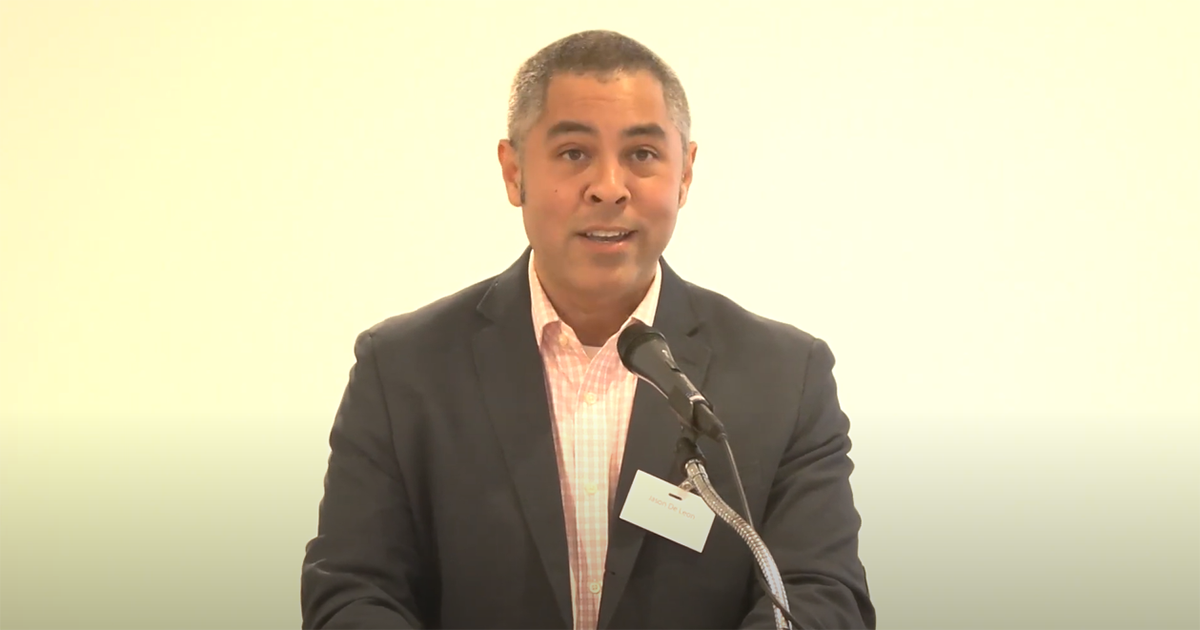
During his opening remarks, institute director Jason De León noted how the institute, even beyond his student years, continues to be a beacon for him and all those investing in the study of archaeology at UCLA.
Jason De Leon
During his opening remarks, institute director Jason De León noted how the institute, even beyond his student years, continues to be a beacon for him and all those investing in the study of archaeology at UCLA.

By Alvaro Castillo


While many things may have changed over the first half century of the UCLA Cotsen Institute of Archaeology, its key mission has not, according to attendees of the anniversary celebration in March.

Jason De León, institute director and professor of anthropology and Chicana/o and Central American studies, opened the program by quoting founding director and professor emeritus of history and Near Eastern languages and cultures Giorgio Buccellati’s initial 1974 report.

“‘We are creating here at UCLA something which is in line with the best archaeological truth and tradition, and yet is unique on the American scene…a comprehensive, interdisciplinary reconstruction of the human past,’” said De León. “‘We are truly an institute of archaeology writ large without parochial limitations of geography or methodology.’”

As attendees applauded the sentiment, De León added, “I think [these words] very, very much still ring true.”

Noting that appointing De León to the directorship last November was “one of the most important things that I’ve done in my role,” Abel Valenzuela, interim dean of the division of social sciences, shared his admiration for the institute.

“From a small group of passionate volunteers evolved an organized group of friends of archaeology who through their own sheer force of will and dedication began creating programs and events, one of the purest examples of the power of community, multidisciplinary, interdisciplinary communities,” he said. “My thanks to everyone, past and present, who dedicated themselves to making the Cotsen Institute what it is today.”

Several of those luminaries spoke at the event, including Stephen Acabado, chair and professor of archaeology, as well as former institute directors and professors emeriti Buccellati, Merrick Posnansky (anthropology and history), Charles Stanish (anthropology) and Willeke Wendrich (Near Eastern languages and cultures). Another milestone was celebrated as well, when Thiago Puglieri, assistant professor of art history and conservation of cultural heritage, spoke on behalf of the UCLA/Getty Interdepartmental Program in the Conservation of Cultural Heritage reaching its 20th anniversary.

Thanking the speakers as well as everyone who had played a role in the ongoing story of the institute, De León closed the event by affirming how vitally important the institute had been to his own life, from a “lost kid with a green mohawk hiding under a baseball cap” applying for a work study position in the late Professor Jeanne Arnold’s lab to now being in charge of it all.

“When I say that I’m humbled, that’s an understatement of epic proportions. … I come to this position with a commitment to honoring the legacy of the place while building on the work of my wonderful predecessors,” De León said. “Every day that I’m able to walk into that building with the one window, I am reminded how special that place is for our staff, for our students, for our faculty and all of our many visitors who get excited and inspired by this thing that we call archaeology and all that it has to offer.”